
It is hard to tell from across the room whether your aging dog or cat is slowing down or quietly getting sick, and a senior screening is how you find out which one it is. What it turns up is specific: kidneys losing ground, a thyroid running too fast or too slow, blood pressure high enough to cause sudden blindness, an enlarging heart, and on Guam, heartworm or a tick-borne infection that has had months to settle in without a single outward sign. Senior status arrives on a sliding scale, as early as six for the biggest dogs and around ten for cats and small breeds, and most of these problems start well before your pet acts old. Caught on a lab panel, a blood pressure reading, or an X-ray, nearly all of them can be managed for years; by the time symptoms show, the options are narrower.
Guam Pet Hospital in Hagåtña treats a senior checkup as the chance to learn what is happening inside your pet, not just to confirm they look fine on the exam table. We run the bloodwork that shows how the kidneys, liver, and thyroid are holding up, take digital X-rays to see the heart and lungs, and because parasite season on Guam never ends, we test for heartworm and tick-borne disease in the same workup. Then we go through the numbers with you, so you know what is normal for your pet and what we want to watch. If your dog or cat is getting up there in years, book a senior visit and we will go over which tests make sense for them.
What Senior Screening Catches Before You Do
- Giant breeds hit senior status around six, most dogs around seven, and cats and small dogs closer to ten, so when to start screening depends on the pet in front of us.
- Kidney disease, thyroid disorders, high blood pressure, and heart disease all cause measurable changes in blood, urine, or on an X-ray long before your dog or cat looks sick.
- Comparing this year's numbers to last year's is what catches disease early, because a value can drift the wrong way for years while still reading as technically normal.
- Heartworm and tick-borne infection belong in every senior workup here, since Guam never gets the cold season that slows transmission down elsewhere.
What's Changing Inside an Older Pet Before You Can See It?
Kidney, liver, and thyroid values often start shifting while a senior pet still looks terrific on the exam table, which is why a normal physical exam and normal preventive testing results aren't the same thing.
Your senior dog is not aging at your pace. A twelve-year-old packs about four years of aging into one calendar year, and a new murmur, a climbing blood pressure, and a five-pound weight loss can all land between one annual visit and the next. Wellness visits every six months close that gap.
Direction and trends matter more than any single result. Picture three yearly creatinine values on the same cat:
- 0.9 the first year
- 1.0 the next
- 1.5 the year after
Creatinine is used to measure kidney function, and a normal value is usually between 0.8-2.4. All three of those values sit inside the normal range, and alone wouldn’t flag anything unusual. The climb is the finding; when we have labs from previous years to compare against, we can see the kidneys beginning to lose function year after year and can start to make changes before your pet feels ill.
What Goes Into a Full Senior Screening?
A senior screening isn't one fixed panel that every patient gets. Bloodwork, urinalysis, blood pressure, and imaging move to a twice-yearly rhythm for senior pets once a pet crosses that line, but a healthy nine-year-old Lab and a fifteen-year-old cat with a murmur won't get the same list on the same day. We build it around species, breed, what our hands and stethoscope find during the exam, and what the last set of results looked like.
Which Diseases Are We Looking For in Older Dogs and Cats?
Most of what we find in aging pets falls into a handful of categories, and nearly all of them are manageable when they're caught early: hormone disorders, kidney and liver disease, heart problems, cancer, arthritis, dental infection, and here, parasites.
Hormones and Organ Changes
- Hormone disorders: In dogs, hypothyroidism shows up as a coat that thins and dulls, skin infections that keep coming back, a dog who seems slower and colder than he used to be, and weight that creeps up even though the food bowl never changed. A daily tablet usually turns all of it around. Cats run the opposite direction. Hyperthyroidism speeds the whole body up, so an older cat eats ravenously, loses weight anyway, yowls at night, and strains her heart and kidneys until a daily medication, a prescription diet, surgery, or radioiodine therapy brings the thyroid back down.
- Kidney disease: Chronic kidney disease is one of the most common diagnoses in senior cats and older dogs, and roughly two thirds of function is typically gone before you notice the extra drinking, the heavier litter clumps, or the weight sliding off. Treatment is plain and it works: a kidney-friendly diet, water in easy reach, blood pressure kept in range, and rechecks that show whether the plan is holding.
- Liver changes: Liver enzymes tend to climb before a dog or cat shows any outward sign, and the cause can be a medication, a hormone disorder, or primary disease in the organ itself, so the pattern and a recheck matter more than a single high number. Poor appetite, vomiting, drinking more than usual, or a yellow tint to the gums moves the workup along faster.
Heart and Blood Vessels
- Heart disease: Mitral valve disease is far and away the most common heart problem in small breed dogs, a slow leak in one of the heart's valves that often starts as a soft murmur years before a cough or a drop in stamina shows up at home. Cats go a different route, where thickened heart muscle can sit silent until breathing suddenly turns fast and shallow, and starting medication at the right moment measurably delays congestive failure.
- Blood pressure: High blood pressure damages an older pet's eyes, kidneys, heart, and brain long before anything looks wrong at home. Hypertension in dogs and cats is usually secondary to another problem, most often chronic kidney disease or an overactive thyroid. Measuring it takes about a minute with a small cuff on a leg or a tail.
Cancer and Brain Health
- Lumps, masses, and cancer: Cancer in pets runs from a slow-growing fatty lump that never causes trouble to aggressive tumors of the spleen, bone, or lymph nodes, and the difference is settled by a needle aspirate or biopsy, never by how the lump feels under your fingers. Anything that grows, changes shape, bleeds, or won't heal deserves a look, and so does unexplained weight loss. Most lumps we sample turn out to be nothing.
- Brain and behavior changes: Night pacing, staring at walls, getting stuck behind furniture, or forgetting house training reads like ordinary aging, but it can also come from cognitive dysfunction, high blood pressure, or pain, so bring a behavior change to the visit the same way you'd bring a limp.
Pain in Joints and Mouth
- Arthritis and sore joints: Sore joints are nearly universal in old dogs and badly underdiagnosed in cats, who don't limp so much as stop jumping, start missing the litter box, or quit grooming the spots that hurt to reach. We diagnose it with a hands-on exam and X-rays of the joints in question, then build a plan from weight control, joint supplements, prescription pain medication, a monthly injection that targets arthritis pain signaling, and simple changes like rugs on slick floors. Never give your pet ibuprofen, naproxen, or acetaminophen; these are dangerous for dogs and can be fatal to cats.
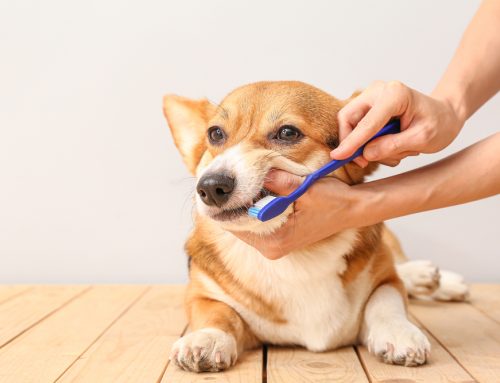
- Dental disease: Dental care is whole-body care, because the bacteria living under an inflamed gumline travel through the bloodstream and add strain to the heart, liver, and kidneys. Bad breath, a preference for chewing on one side, drooling, or dropped kibble all count as signs, and a professional cleaning under anesthesia is the only way to treat what sits below the gumline. If your pet's mouth has changed, have us take a look.
What Does Senior Blood Work Show Us?
One blood sample measures red and white cells, kidney and liver values, blood sugar, electrolytes, and thyroid hormone, and here it also screens for heartworm and tick-borne infection. Most of those values change well before your pet's behavior does. We run senior bloodwork in our in-house lab, so the results and the conversation about them happen in one visit.
| Test | What it looks at | What it can turn up |
| Heartworm test | Antigen shed by adult Dirofilaria immitis | Heartworm infection, a risk that runs year-round on Guam |
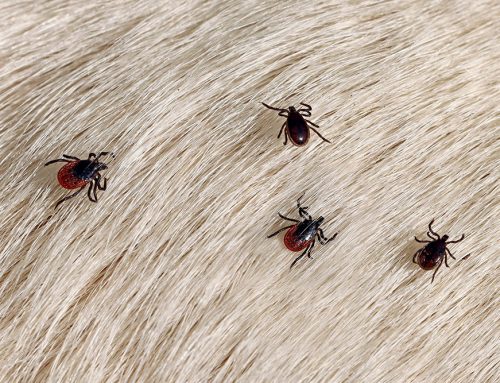
| Tick-borne panel | Antibodies against Ehrlichia, Anaplasma, and their relatives | Quiet infections behind anemia, low platelets, and sore joints |
| Chemistry panel | Liver and kidney numbers, protein, glucose, electrolytes | Liver disease, kidney disease, dehydration, diabetes |
| Complete blood count | Platelets and the red and white cell lines | Infection, inflammation, anemia, certain cancers |
| Thyroid level | Thyroid hormone in circulation | Hyperthyroidism in cats, hypothyroidism in dogs |
Mosquitoes and ticks don't take a season off here, so both of those tests stay on the list even for a dog who's been on prevention all year. Doses get missed, and an infection picked up eighteen months ago can sit quietly the whole time.
One odd value on one day isn't a diagnosis. A skipped breakfast, mild dehydration, and a stressful car ride all nudge numbers around, so a mildly abnormal result usually needs a recheck rather than a prescription.
What Shows Up in Urine Before It Shows Up in Blood?
Urine carries the first evidence of several problems that blood work only registers later, sometimes months later. Urinalysis picks up urine that is too dilute, protein slipping through where it does not belong, sugar that points toward diabetes, and the white blood cells and bacteria of a brewing infection.
Healthy kidneys pull water back out of the filtrate and send out a concentrated product, and failing ones lose that ability first. That's why a blood value and a urine sample drawn on the same morning tell a fuller story than either does alone.
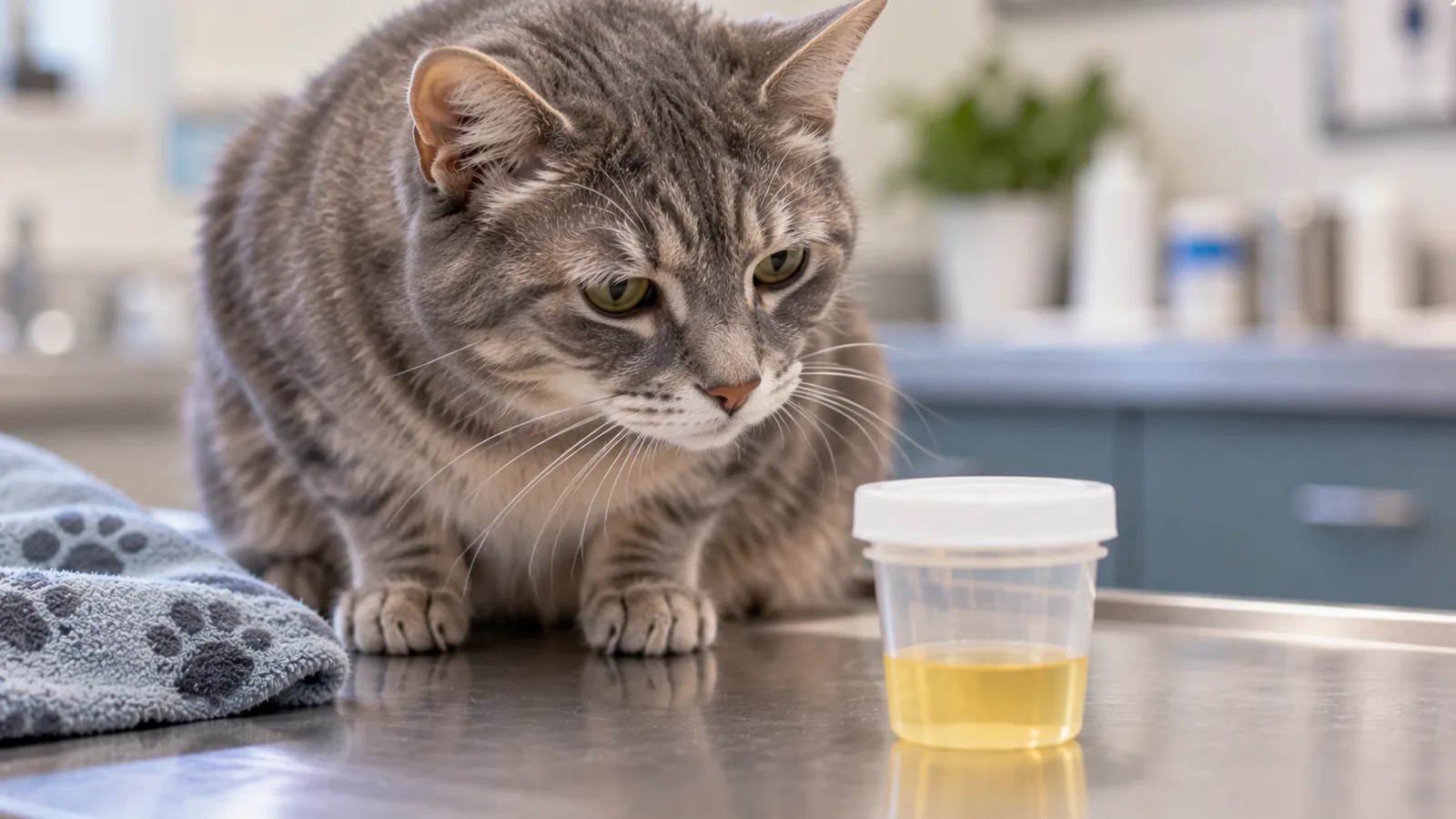
Older pets also get bladder infections without the straining and accidents you'd expect, especially cats with kidney disease. Collecting at home is easy enough: catch a midstream sample in a clean container first thing in the morning and keep it cool, or swap the litter for a handful of unscented aquarium gravel overnight. If that turns into a wrestling match, bring your pet in and we can collect the sample here.
How Do You Check a Senior Pet's Heart?
Cardiac screening starts with a stethoscope and a set of hands, then adds tests when the exam raises a flag: a murmur, an off rhythm, a cough, or a cat breathing faster at rest than she used to.
A murmur tells us something is there but not how serious it is, which is why diagnosing heart disease leans on chest films to size the heart, an echocardiogram to watch the valves move, an NT-proBNP blood test to gauge strain, and an ECG when the rhythm is irregular. Chest X-rays are our first look here, showing the silhouette of the heart and whether fluid is backing into the lungs. An echocardiogram, an ultrasound of the beating heart, grades a leaky valve or thickened muscle, and we refer that one out.
Count your pet's breaths for a minute while they're sound asleep and not dreaming. Under about thirty is typical, and a resting rate that climbs and stays above forty in a pet with known heart disease is worth a call to us.
When Does a Senior Pet Need X-Rays or an Ultrasound?
A senior pet needs imaging when an exam finding or a lab value leaves a question that numbers alone cannot finish. Radiography gives a fast, painless look at heart size, lung fields, arthritic changes in the spine and hips, bladder stones, and the overall size and position of the abdominal organs, all in a few minutes with no sedation for most pets.
| X-rays | Ultrasound | |
| Best at | Bone and joints, heart size and shape, lungs, bladder stones, organ outlines | Internal texture of organs, free fluid, masses, bladder and intestinal walls |
| What it shows | Size, shape, position, density | Layers and architecture inside an organ |
| Sedation | Usually none | Usually none, occasionally light sedation |
| Where it happens | In-house on our digital X-ray | Referred out, and we arrange it and review the results with you |
The two answer different questions. Film tells us a spleen is enlarged; ultrasound tells us whether that spleen holds a mass or is simply full of blood. Senior X-rays also turn up things nobody came in for, like the arthritic spine in a dog whose family thought he'd just gotten mellow.
Senior Screening Questions Pet Families Ask Us Most
Should my pet skip breakfast before a senior blood draw?
Skipping the morning meal is what we usually ask for, since a recent breakfast can cloud glucose and cholesterol. Leave the water bowl down. A non-fasted sample still tells us a great deal, and nobody should cancel a visit over a stolen bite of kibble. Call ahead if your pet takes insulin or any medication that has to be given with food, and we'll adjust the plan.
My cat is miserable at the vet. Is all this testing worth the stress?
For most cats, the screening is one blood draw, a urine sample, and a few minutes of quiet handling, and we can spread the pieces across two shorter visits if that goes better. Leaving the carrier out for a week with a familiar blanket inside helps more than anything we do at the hospital, and a calming pheromone spray on the bedding an hour before you leave takes the edge off the drive.
What if the results come back abnormal?
Most abnormal results are mild, and a good share turn out to be nothing once we recheck them. When a finding is real, the next step is usually staging it: one more test, a repeat value in a few weeks, or an image that sharpens the picture. Then we sort out with you what's worth treating now and what we simply keep an eye on. Finding something on a screening panel is the good version of finding it.
Senior Care Planning at Guam Pet Hospital
The hardest part of an aging dog or cat is not knowing whether what you're seeing is age or illness, and that's the question a screening answers. We'd rather find a problem in a lab value than in a crisis. Catching a senior disease early gives us more treatment options and keeps your aging pet comfortable into their golden years.
Book your senior pet's next visit whenever you're ready, and bring your list of questions.